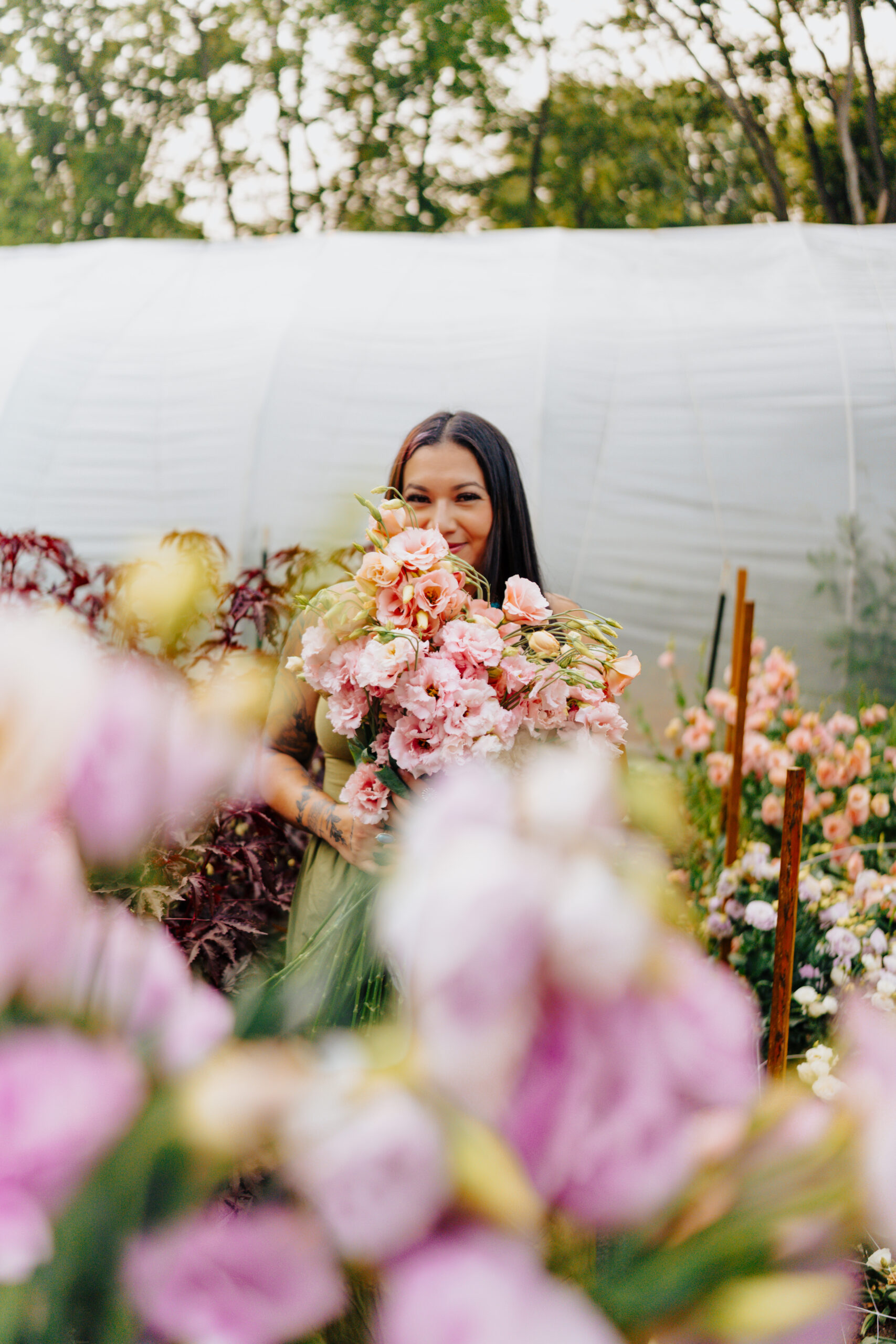
As the sun rises over the fields in Rapidan, rows of colorful blooms catch the light and bees drift from flower to flower. While visitors may see beautiful bouquets and vibrant fields in bloom, owner of Azalea Field Flowers Claudia Vasquez sees something more; a working farm, a thriving ecosystem, and the realization of a dream that began with a handful of seeds and the belief that something beautiful could grow right here in Culpeper County.
Flowers accompany some of life’s most meaningful moments. They celebrate weddings, welcome new babies, brighten birthdays, comfort families during times of loss, and mark countless milestones in between. Yet while flowers are woven into so many of our memories, few people stop to consider where those blooms were grown or the care, patience, and dedication that brought them to life.
That realization is at the heart of Azalea Field Flowers.
Owned and operated by Claudia Vasquez, this small cut flower farm was born during a deeply personal season of healing, when gardening became a source of peace, purpose, and hope. What started as a personal journey gradually grew into something much bigger—a vision to create a farm that would not only grow beautiful flowers but also help people reconnect with local agriculture and better understand the story behind every bouquet.
“When I started this journey, I wasn’t simply planting flowers,” Claudia said. “I was planting the seeds of a dream to build something meaningful from the ground up—a place where beauty, agriculture, education, and community could all grow together.”
Today, every stem grown at Azalea Field Flowers reflects that vision. Grown by hand on the farm in Rapidan and harvested at peak freshness, Claudia’s flowers offer an alternative to the blooms that often travel thousands of miles before reaching grocery stores and florist shops.
“When people shop for flowers, they rarely stop to ask, ‘Where did these come from?'” Claudia said. It’s a question she hopes more people will begin asking.
Most cut flowers sold in the United States are imported, harvested before reaching their peak, refrigerated, and shipped through multiple distribution centers before arriving in someone’s home. While many consumers simply see a beautiful bouquet, Claudia sees an opportunity to educate people about the value of buying local.
Choosing locally grown flowers means investing in family farms, strengthening the local economy, reducing the environmental impact of long-distance transportation, and bringing home blooms harvested at the height of their beauty and freshness.
“Every bouquet tells the story of Culpeper County,” Claudia said. “The changing seasons, the weather, the soil, and the hands that grew it.” That connection to the land influences every decision made on the farm.
At Azalea Field Flowers, Claudia believes flowers can be grown in a way that works with nature rather than against it. Instead of relying on chemical pesticides, she focuses on building healthy soil, encouraging biodiversity, protecting pollinators, and using natural, integrated pest management practices that support a balanced ecosystem.
The work often looks different than people might expect. Some mornings begin with hand-picking Japanese beetles into buckets of soapy water. Other days are spent releasing beneficial nematodes into the soil, planting flowers that attract pollinators, or simply observing the fields to understand what nature needs next. Throughout the growing season, bees, butterflies, ladybugs, lacewings, praying mantises, and countless other beneficial insects become partners in maintaining the health of the farm.
“Flower farming isn’t about creating a perfect field,” Claudia explained. “It’s about creating a balanced one.”
Like every farmer, Claudia also understands that each season brings its own challenges. Late frosts, heavy rains, summer heat, and drought all shape what the fields become. While those challenges can’t be controlled, they can be learned from.
“Rather than forcing nature, we work alongside it,” she said. “Every season teaches patience, resilience, and respect for the land.”
That mindset has guided Claudia as she’s built Azalea Field Flowers from the ground up. Through education, hands-on experience, countless hours in the field, and a willingness to continue learning, she has transformed a personal dream into a growing farm that serves her community while demonstrating that agriculture comes in many forms.
The connections she has built along the way have become one of the most rewarding parts of flower farming. Whether creating everyday bouquets, designing wedding florals, or providing flowers for life’s more difficult moments, Claudia treasures getting to know the people she grows for and seeing her flowers become part of their stories. The farm has also become a true family effort, built with patience, grit, and pride in creating something meaningful together.
Looking ahead, Claudia hopes Azalea Field Flowers becomes more than a place to purchase locally grown flowers. Through U-pick opportunities, hands-on workshops, seasonal gatherings, and immersive farm experiences, she wants visitors to experience every stage of the growing season and leave with a deeper understanding of the work, patience, and care that goes into every bouquet. This year, the farm also launched its first Spring CSA, allowing members to enjoy the season’s earliest blooms while helping support the important work that happens long before flowers begin to bloom.
“My hope is that Azalea Field Flowers helps change the story,” Claudia said. “I want every bouquet to inspire curiosity about where flowers come from, the hands that grow them, and the importance of supporting local agriculture.”
For Claudia, success isn’t measured only by the flowers she grows, but by the connections they create. “If someone leaves the farm with a bouquet in one hand and a greater appreciation for local farming in the other,” she said, “then I’ve accomplished exactly what I set out to do.”
By choosing locally grown flowers, customers are doing more than purchasing a beautiful arrangement. They’re supporting a local farm, investing in Culpeper County agriculture, helping protect pollinators, reducing the environmental impact of imported flowers, and ensuring that farms like Azalea Field Flowers can continue to grow for generations to come.
Because at Azalea Field Flowers, every bloom has a story—and every bouquet is rooted in the land, the seasons, and the community that make it possible.